
A Scientific Culture Under Military Pressure
American PrometheusThis thread traces the growing militarization of American science and Oppenheimer’s efforts to preserve intellectual independence within it.
increasing Bearing strength in each event
 decreasing
Bearing strength in each eventdecreasingSmall Science at Berkeley

Small Science at Berkeley
Theory and conversation
Oppenheimer built a theoretical school based on seminars, close mentorship, and fast movement among problems. His students experienced physics as an open frontier.
A contrast in scale
Ernest Lawrence’s cyclotrons represented a different future: costly equipment, industrial support, and large teams. The friendship between the two scientists bridged distinct models of research.
The Military Enterprise
The Military Enterprise
Science organized for war
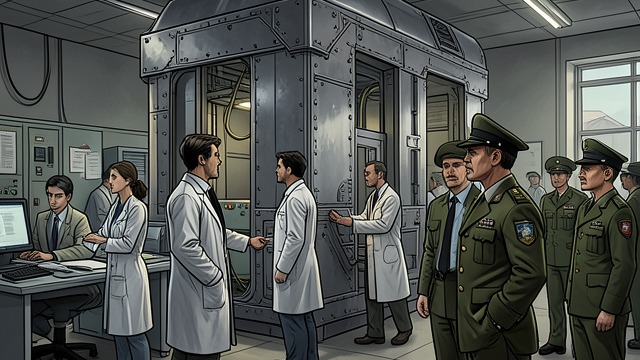
The Manhattan Project mobilized scientists, industry, and the military on a scale without precedent. Oppenheimer became an administrator inside this system while negotiating its security demands.
Expertise constrained
The project relied on intellectual exchange but was governed by military priorities. This experience demonstrated both the power and the limitations of scientific leadership.
The Postwar Contract
The Postwar Contract
A new public role
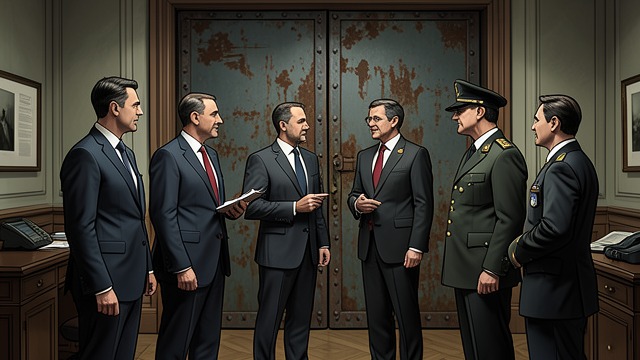
Scientists emerged from the war with prestige and access to government. Oppenheimer tried to use that standing to influence international control and weapons policy.
Dependence grows
At the same time, research institutions became increasingly tied to military contracts. The public authority of science and its dependence on the state developed together.
The Hearing’s Warning

The Hearing’s Warning
Dissent punished
Oppenheimer’s removal showed scientists that disagreement about policy could threaten access and reputation. The security process made political conformity part of professional life.
A boundary narrows
Many researchers withdrew from public debate and focused on technical questions. The government retained scientific expertise while reducing the authority of independent criticism.
The Military-Industrial Complex
The Military-Industrial Complex
A growing system
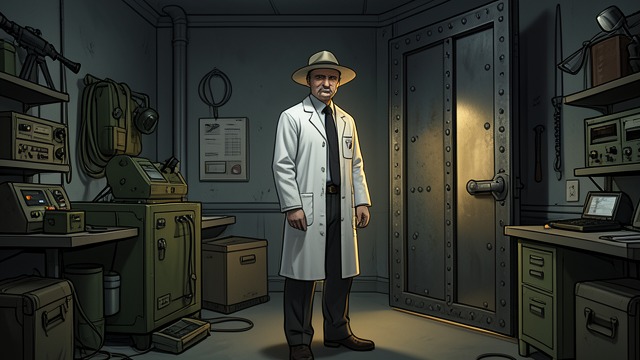
Oppenheimer observed the expansion of weapons laboratories and military-funded research. He worried that science was becoming subordinate to national security institutions.
A warning left unfinished
His influence was limited after the hearing, but his life illustrated how closely technical research could be bound to political power. The issue outlasted his ability to address it.
1929–1938, during Oppenheimer’s Berkeley years
1942–1945, during the Manhattan Project
1945–1950, as science returns to universities
1954, after Oppenheimer’s clearance was revoked
1961–1967, during Oppenheimer’s final years
